Abri du voyageur Hotel - Haunted Hotel in Montréal, Quebec
9 Rue Sainte-Catherine O, Montréal, QC H2X 1Z5, Canada
Paranormal Phenomena Reported
The Haunted History
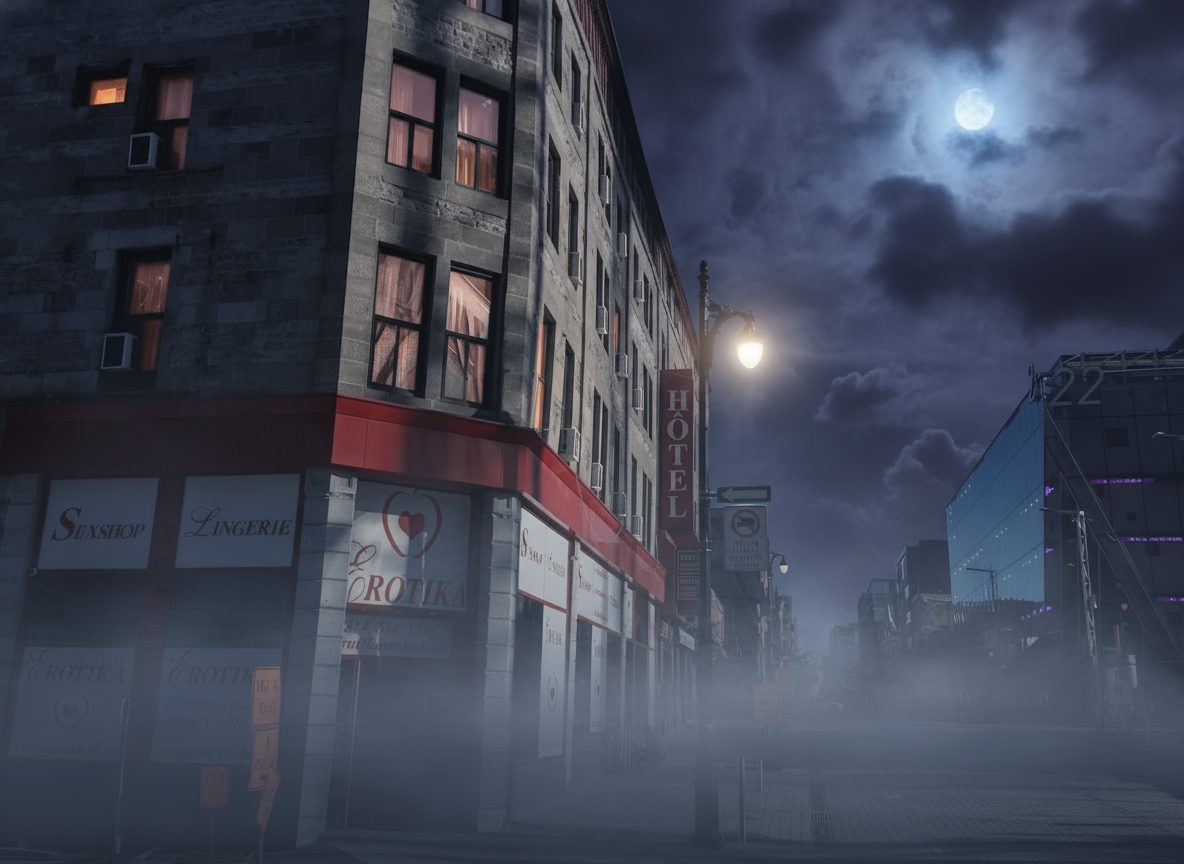
Built in the 1870s, the building now hosting Hotel l'Abri du Voyageur was originally named Bolero Tourist Rooms and has a long, sordid history catering to the seedy characters of Montreal's infamous Red Light District. Located at the corner of Clark and St. Catherine Street (nicknamed ""St. Kit's"")—the epicenter for drug dealing—during the Red Light era, Bolero Tourist Rooms rented rooms by the hour, serving as a center for drugs and prostitution. The area was characterized by grinding poverty, exploitation, disease, drunken debauchery, premature death, and frequent violence. When Prohibition kicked in across North America in 1919, Montreal refused to join, instead becoming a ""wide open city"" infamous for boozing, gambling, prostitution, and deeply entrenched corruption. Starting in the 1950s, city officials attempted to shut down the Red Light District, and by 2002, proposals emerged to rebrand the entire area as Quartier des Spectacles (Entertainment District). The building has since been fully refurbished as a boutique hotel with beautiful rooms featuring exposed brick walls and tasteful paintings—but the dark history refuses to stay buried. The paranormal phenomena at the former Bolero Tourist Rooms manifest primarily through electronic disturbances. TVs in rooms randomly change channels and refuse to stay on one selected channel, cycling through stations as if invisible hands constantly press the remote. Phones ring randomly throughout the night with no one on the other end—guests answer to find only silence or dead air, the ringing recurring throughout their stay. Most disturbing to modern travelers, cell phone and tablet batteries are unexpectedly drained inside the hotel, devices going from full charge to dead within hours, only to spring back to life once guests step outside the building. Paranormal theory suggests ghosts are capable of draining batteries due to their negative energy requiring power to manifest. A psychic medium who investigated the property in the mid-1990s detected a shadowy figure staring at her through one of the windows. When she attempted to communicate with the entity, she felt an overwhelming evil presence, and it disappeared—only to reappear moments later in another window. The shadow seemed to be studying her, creating such intense discomfort that she abandoned the investigation for her own safety, unwilling to continue contact with what she perceived as a malevolent entity. A guest named Brock from Texas who stayed in July 2014 wrote a positive review noting he ""loved the creaking of the wooden floors,"" and the manager helped him prank his 9-year-old granddaughter by claiming the hotel was haunted by ""Marie the little girl ghost who didn't listen to her parents""—unknowingly, the hotel may actually harbor real child spirits. The most probable source of the haunting stems from two unsolved murders that occurred when the building operated as Bolero Tourist Rooms. On Friday, December 14, 1984, Sharon Deslandes, 24 years old with no fixed address, was found dead in one of the tourist rooms. A layer of froth covered her lips, and police initially suspected drug overdose. However, the autopsy confirmed she had been strangled. Almost two months later, a maid discovered another strangled sex worker: Francine St. Hilaire, 35 years old, also murdered by strangulation. Montreal Police began searching for a suspect in his early twenties, a hunt that led them to Toronto. On December 3, 1985, the body of Faith Constance Russell, 38, a University of Toronto dental technician, was discovered wrapped in a sleeping bag in the apartment she shared with Gregory George Ashford. Toronto police linked Ashford to the murders of at least five young women, and a Canada-wide warrant was issued with warnings that he should be considered violent and extremely dangerous. Ashford was finally arrested in Winnipeg after murdering another woman in Halifax. Montreal police interrogated Ashford extensively about the stranglings at Bolero Tourist Rooms, but the murders of Sharon Deslandes and Francine St. Hilaire were never officially solved. In January 1987, Ashford pleaded guilty to second-degree murder of Faith Constance Russell before Ontario Supreme Court Justice John O'Driscoll and received a life sentence with no chance of parole for 20 years. Months later, he received an additional life sentence for the Halifax murder. A psychiatrist diagnosed him as a sociopath with ""reasonably severe, paranoid personality disorder."" Ashford never expressed remorse, instead expressing amazement at how easy it was to kill, and stated he believed he deserved to die for what he had done. He began seeking release after serving 25 years and has been eligible for parole since 2005, though he always abandoned applications when victims' families opposed his release. In 2016, despite Parole Board concerns that he remained an ""above average risk,"" he was allowed to attend Narcotics Anonymous meetings in the community for heroin addiction. Police continue attempting to link him to several other murders, including those at Bolero Tourist Rooms, and it remains unknown if he has been released from prison. Whether the electronic hauntings and shadowy evil presence are related to these brutal strangulations is uncertain, but it's not uncommon for paranormal disturbances to persist at sites where violent tragedies occurred. The murders of Sharon Deslandes and Francine St. Hilaire happened in the mid-1980s when Bolero Tourist Rooms operated as an hourly rental in Montreal's most dangerous district. Now rebranded as Hotel l'Abri du Voyageur, the building attempts to distance itself from its sordid past—but the spirits, whether of murder victims or the countless others who suffered and died in this building during the Red Light era, refuse to be forgotten.
Share Your Paranormal Experience
Had a ghostly encounter at Abri du voyageur Hotel? Tell us about it.